Understanding Concrete Pricing in Maui: What Actually Goes Into Your 2026 Estimate?
If you are planning a renovation in South Maui or Upcountry this year, you probably have one burning question: “How much is this going to cost?”
It is the most common question we get at Diamond Concrete LLC, and rightly so. Living in Hawaii, we are used to the “Paradise Tax”—everything from milk to gasoline costs more here than on the mainland. Construction is no exception.
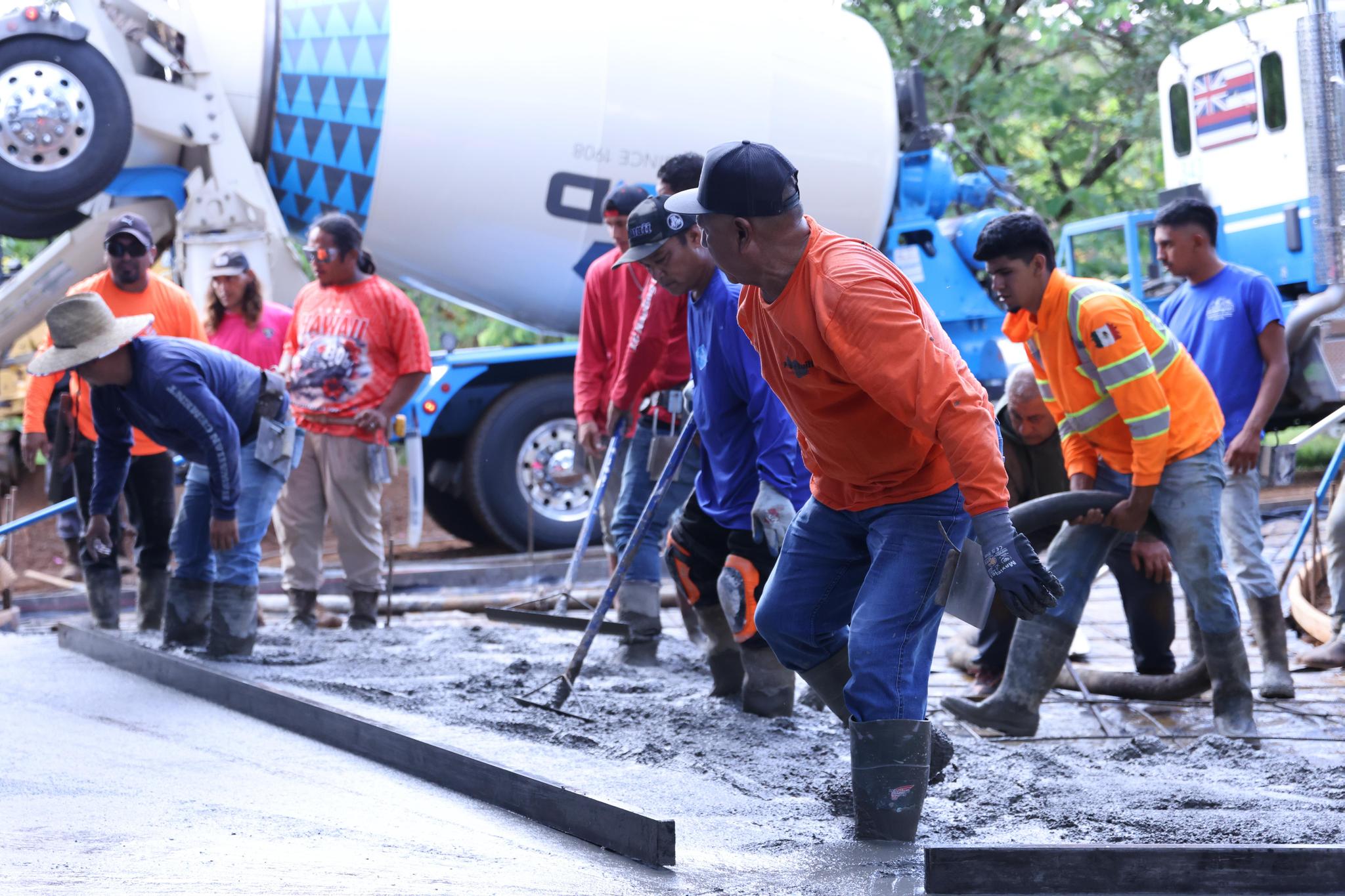
However, when you receive a quote for a driveway or patio, you aren’t just paying for a mixer truck to show up. You are paying for the logistics, the labor, and the longevity of the project.
Here is an honest, transparent look at what drives concrete pricing in Maui and why the “cheapest” bid often ends up being the most expensive choice in the long run.
1. The Island Factor (Logistics & Material)
Unlike on the mainland where resources are just a truck drive away, almost everything in Maui involves shipping.
- Cement & Aggregate: The raw materials are limited locally or imported, which keeps the baseline price per cubic yard higher than the national average.
- Availability: In 2026, demand is high. Securing high-quality mix often requires established relationships with suppliers to ensure your project gets poured on schedule.
2. Site Preparation: The Battle Against “Red Dirt”
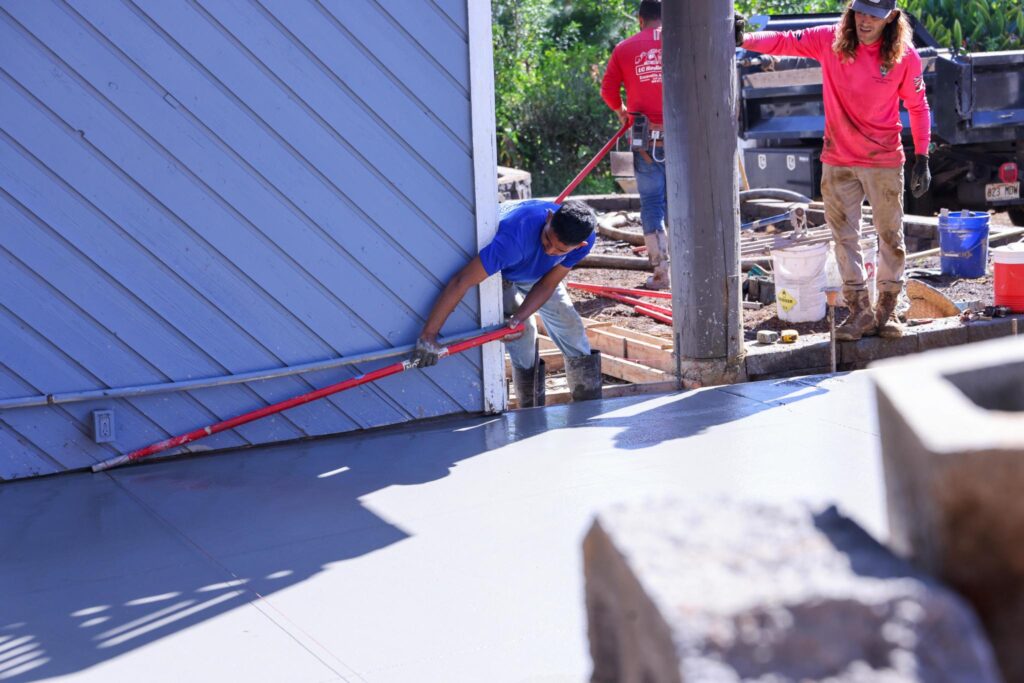
This is the hidden cost that many homeowners overlook. If a contractor gives you a quote over the phone without seeing your property, be careful. In areas like Kihei or Wailea, simply pouring concrete over loose dirt is a recipe for disaster.
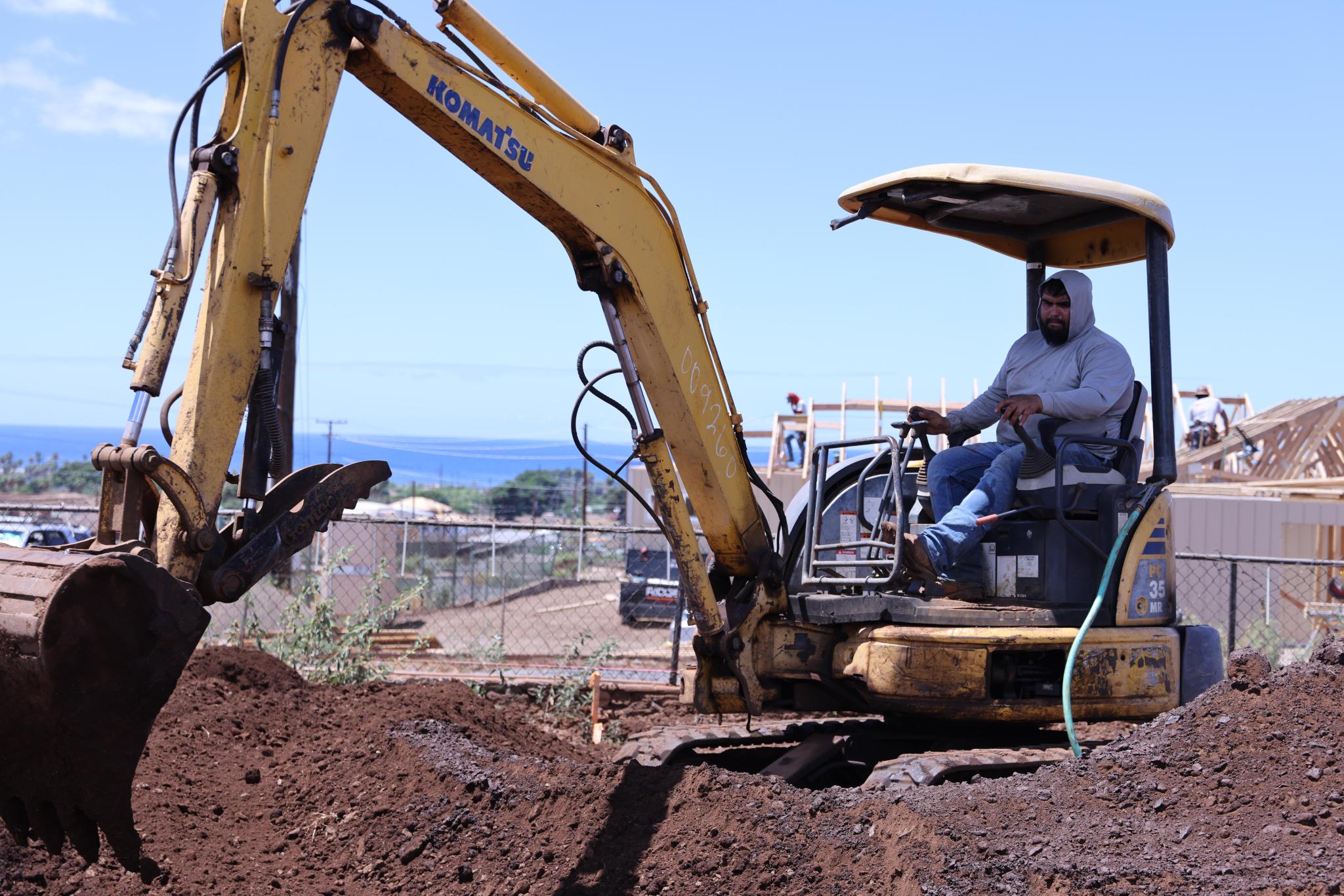
- Grading: We often need to excavate and level the infamous Maui red dirt to ensure stability.
- Base Material: A quality job requires importing crushed rock (base course) and compacting it professionally so your driveway doesn’t sink when the first heavy winter rain hits.
3. The “Pumping” Variable
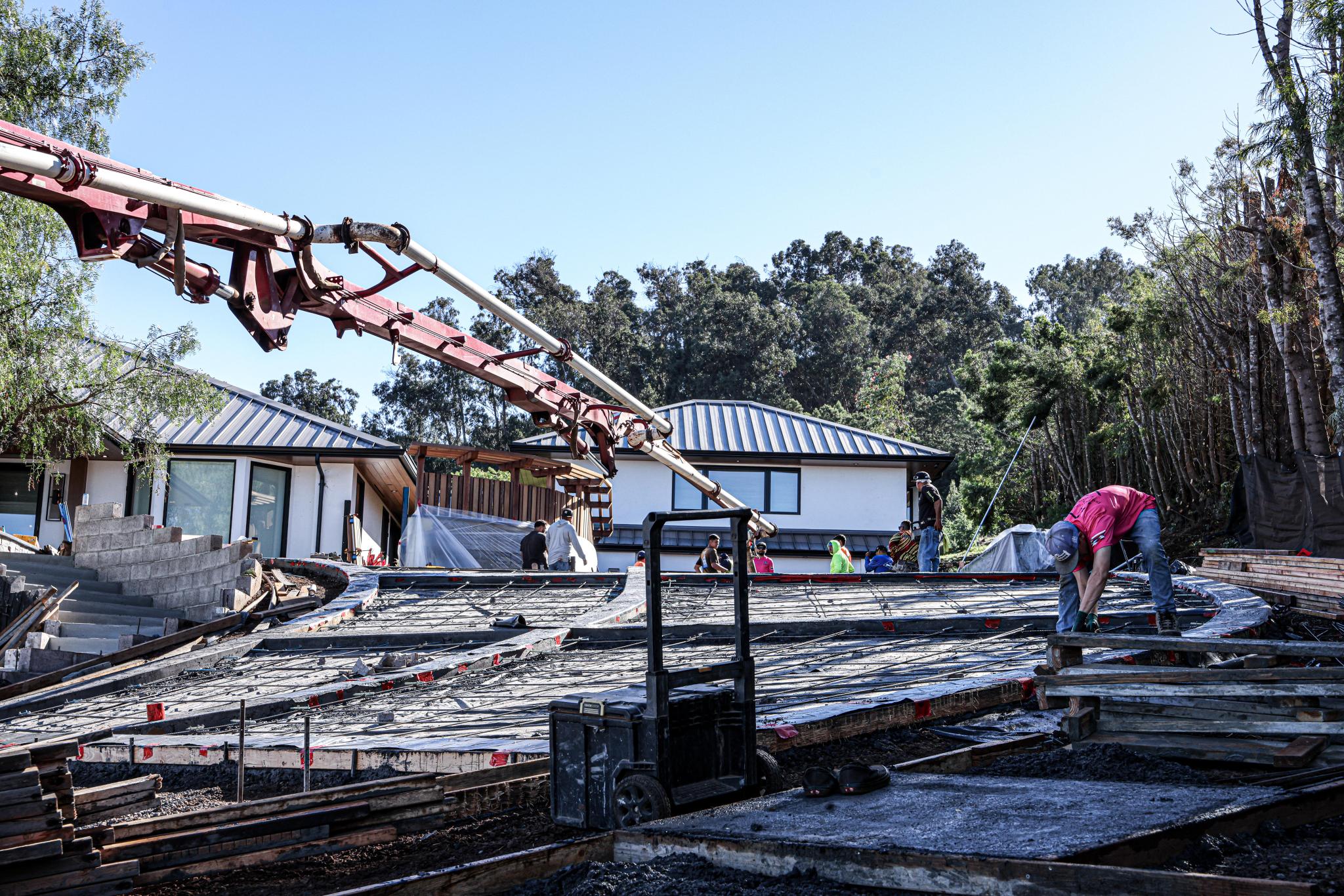
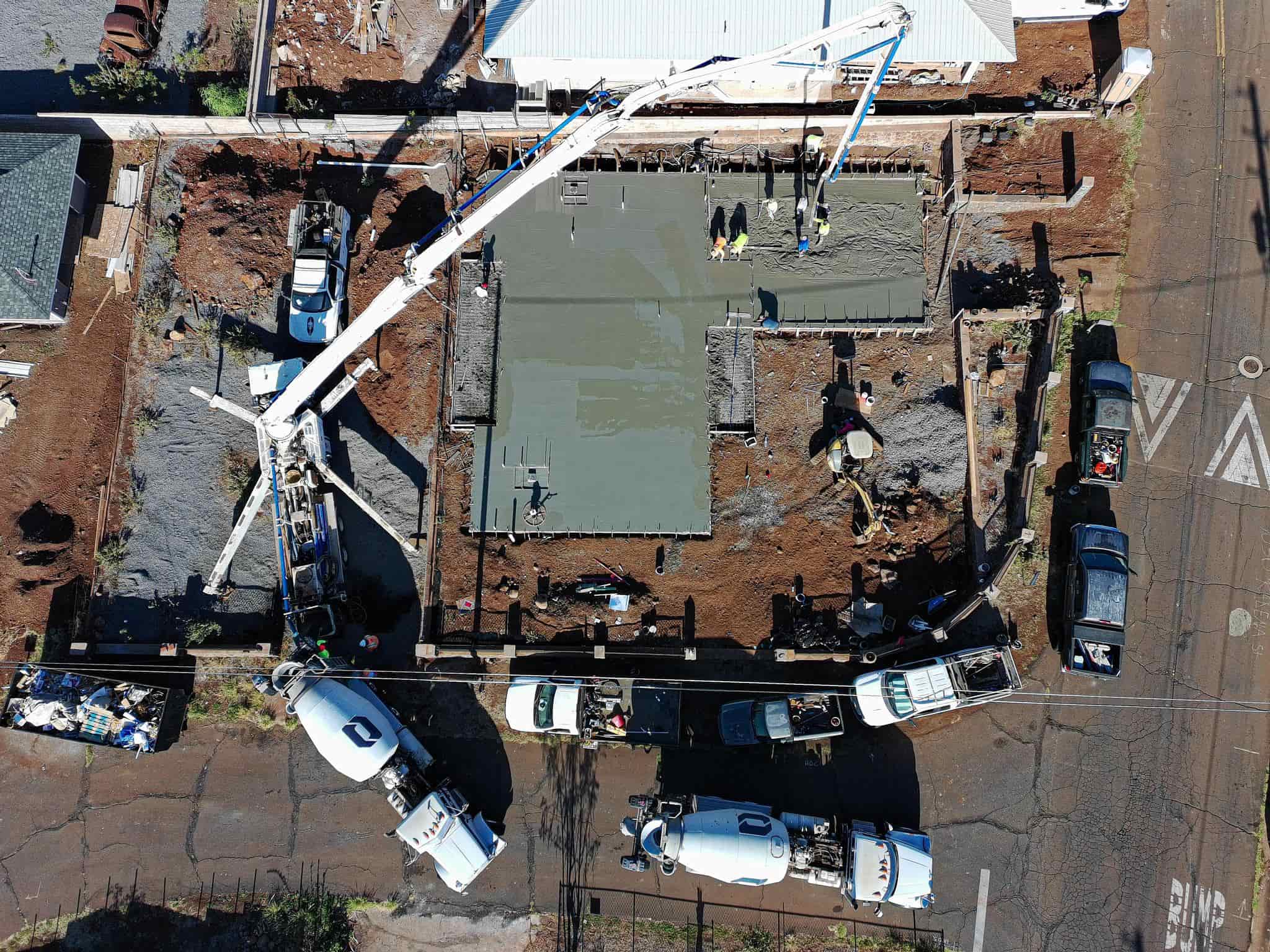
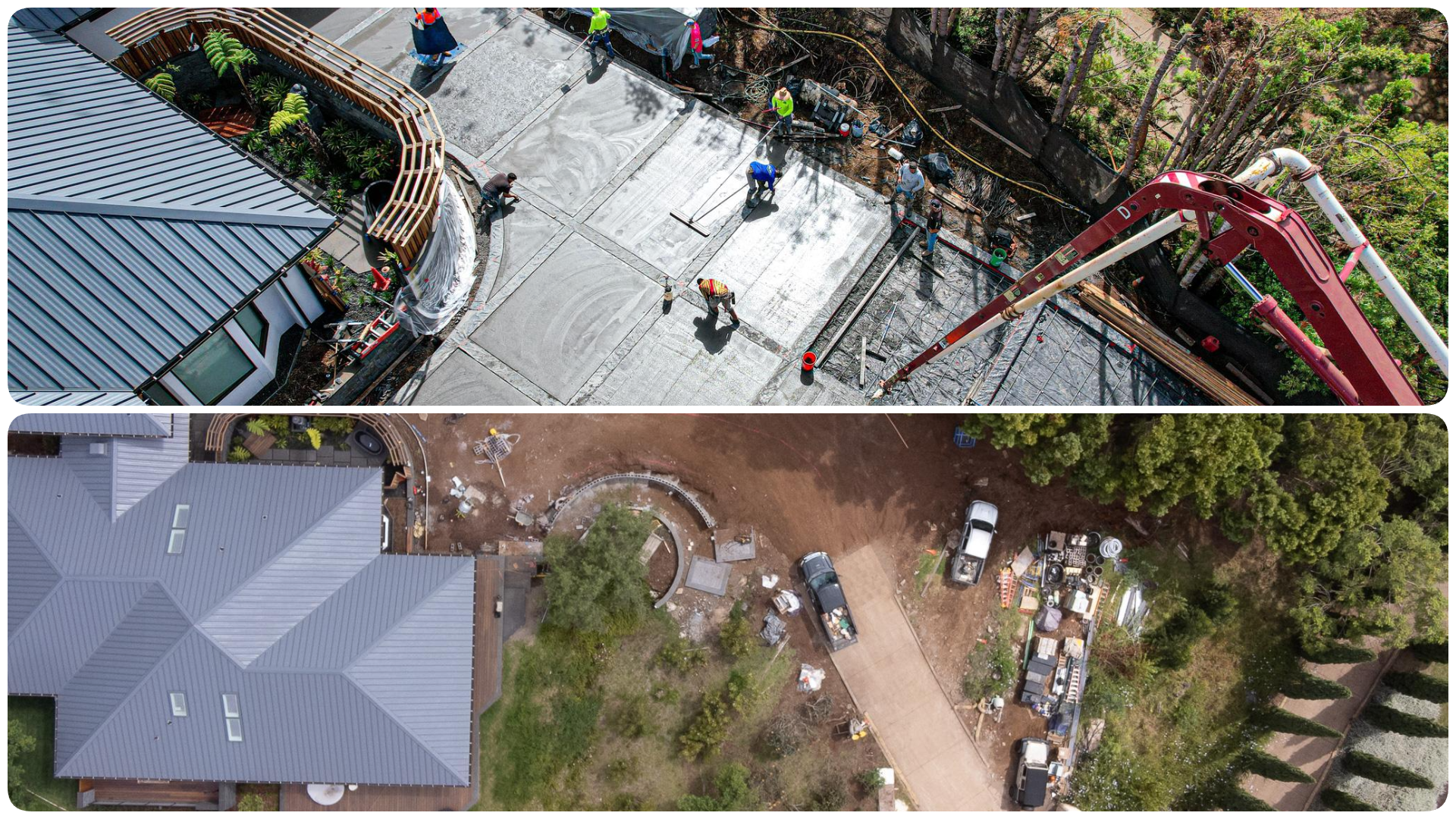
Maui’s terrain is beautiful but tricky. Many homes in Kula or strict AOAO condos in Makena have difficult access. If the ready-mix truck cannot pull up directly to the pour site (because of a steep slope, narrow gate, or finished landscaping), we need to bring in a Concrete Pump. This specialized equipment ensures the concrete gets exactly where it needs to be without destroying your yard, but it is an additional line item on the estimate that “handyman” quotes often leave out (until the day of the pour).
4. Finishing and Longevity (The Salt Air Defense)
Here is where the difference between a “cheap job” and a “Diamond Concrete job” becomes visible. In a coastal environment, standard concrete can deteriorate quickly due to salt air corrosion. Our estimates include:
- High-PSI Mixes: Stronger concrete designed for durability.
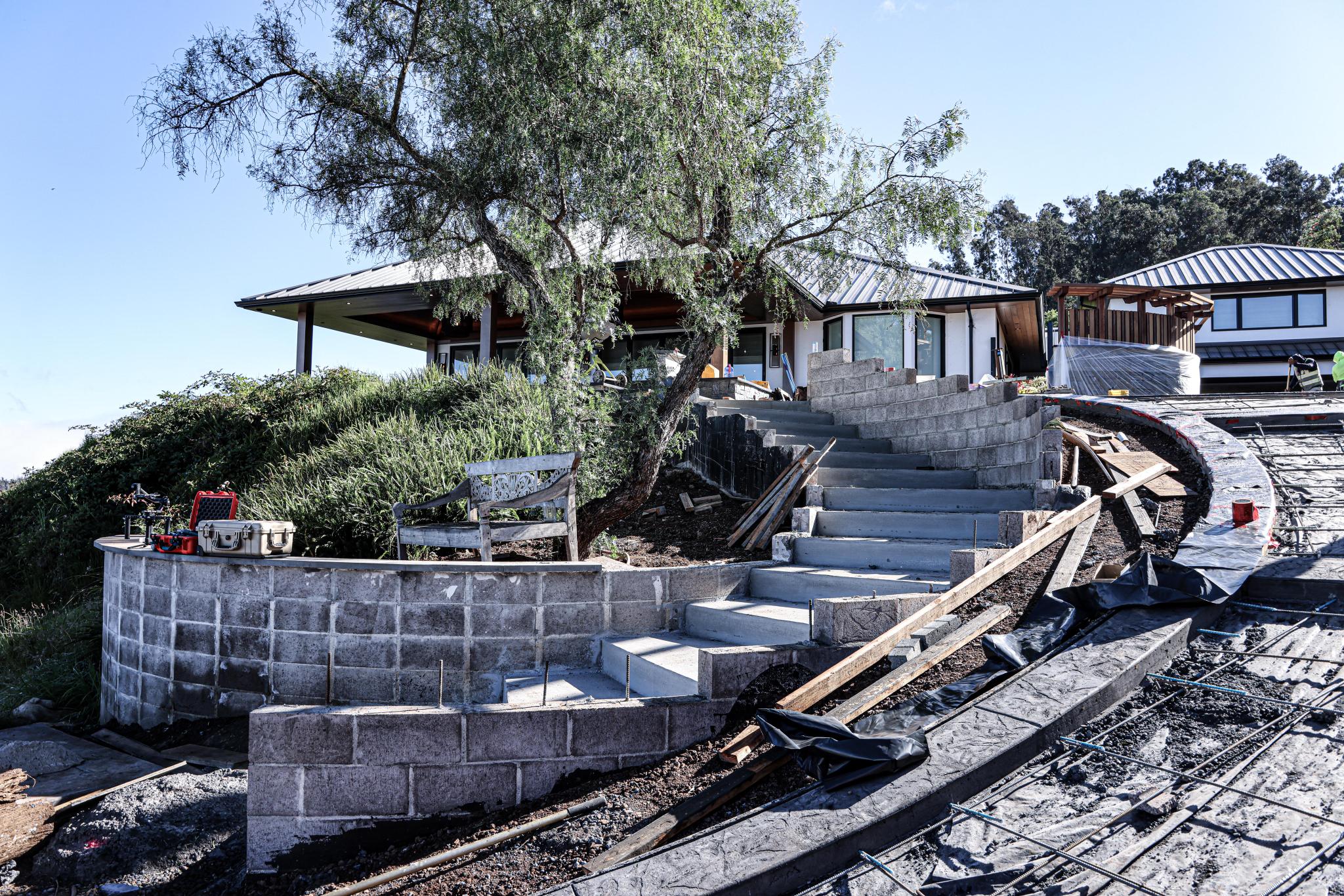
- Rebar Reinforcement: Steel grids to prevent structural cracking.
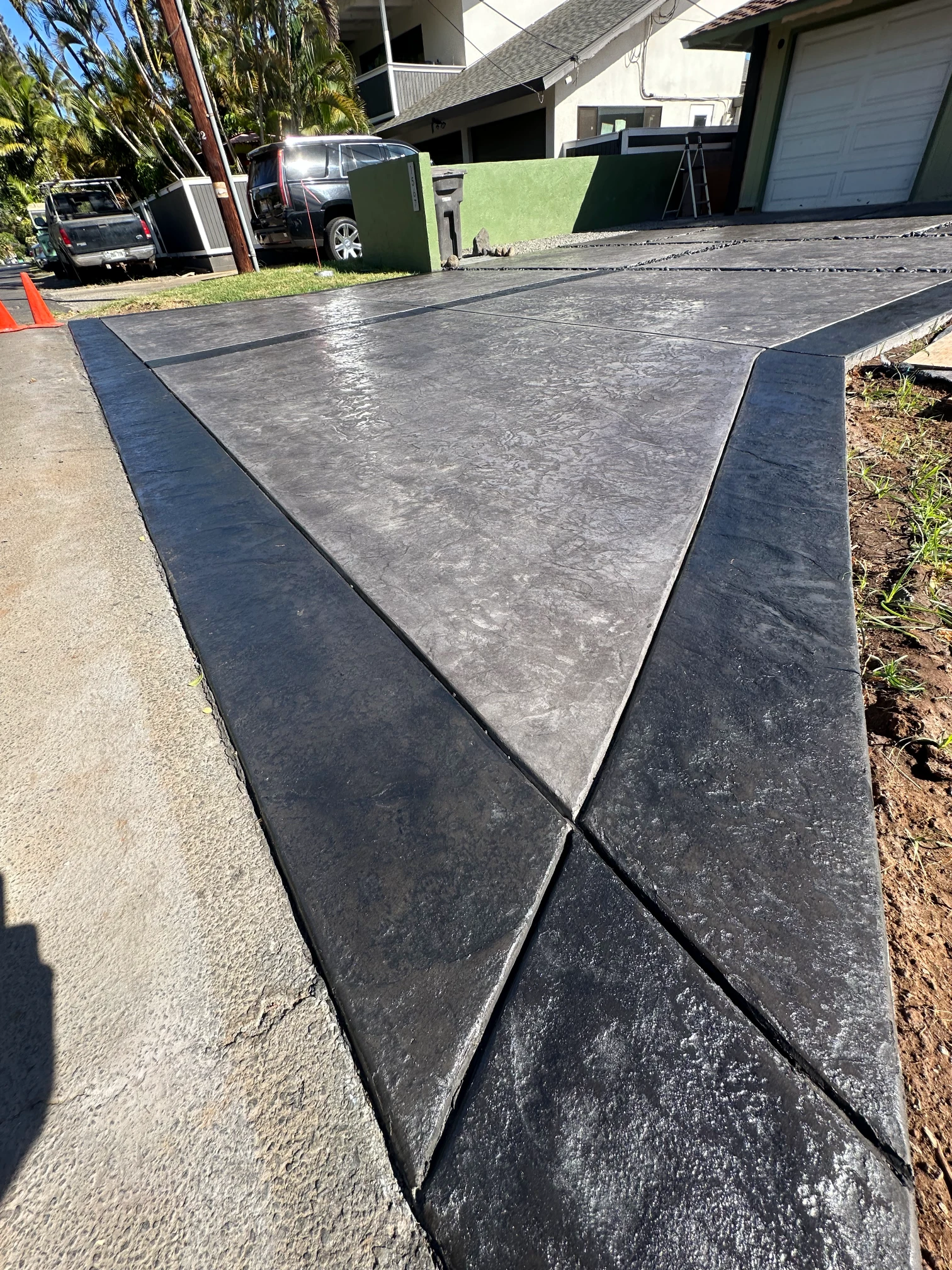
- Professional Sealing: Essential for protecting stamped or decorative concrete from the UV sun and salt.
Why “Square Foot” Pricing is Misleading Many people call asking for a simple “price per square foot.” While we can give rough averages, every project is unique. A flat walkway in Kahului will cost less per foot than a stamped, sloped pool deck in Wailea that requires a pump and extensive grading.
The Bottom Line: An accurate estimate protects you. It ensures there are no surprise costs halfway through the job.
Want a fair, transparent quote for your project? We don’t do guesswork. We come to your property, assess the terrain, and give you a price that reflects a job done right the first time.
👉 Call Julián at 808-250-5952 or fill out our online form to request your onsite estimate.